
How to Make Your Thing
It's time.

Say Goodbye to Hollywood notwithstanding, I still believe Los Angeles is the best place in the world to learn film and television production. To be clear, anyone can absolutely make anything anywhere now. After all, we all have cameras on our PHONES that are literally better than any expensive, clunky camera I grew up using. To stay with the Detroit analogy, they let their manufacturing jobs go, but The Big Three hung onto their R&D departments, design and engineering jobs. They are still the top spot in the country for design talent.
The same is true for Los Angeles. Per capita, Los Angeles still has more showrunners, directors, writers, and department head talent (production designers, costume designers, etc.). I’m guessing still more crew too. A lot of folks are working less and they have so much to teach. Sure, some of them are teaching at one of the many film programs in the LA area, but many of them arent. And the best way to learn, is to DO.
Even if you’re one of the lucky few to be landing jobs right now, there is often still significant downtime between 8-episodes seasons. Where most shows used to get 22 episodes, even the luckiest writers or crew are extremely fortunate to get 16 now on back-to-back shows. Last year, my partner and I decided to use that to our advantage. Making California Scenario was life changing. And not because of some windfall success. So far I/we haven’t made a dime. But it felt like all the waiting around most of us are doing between gigs now was finally going towards something productive. And even as someone who has made TV for years, I learned so much. Our PAs? They basically went to film school on that set for free. The AC who wanted to learn camera operating? He got hands-on experience. The former assistant who wanted to produce? She did that. Everyone brought talent and was gifted knowledge.
Here’s the best part: what we did, ANYONE CAN DO. I promise. I’m going to give you the basic step-by-step here, but feel free to check out previous posts for more. I'm experimenting with a new platform called Nudge where you can ask me direct questions for a small fee. It was developed by a Columbia University student who is testing out the software HERE.
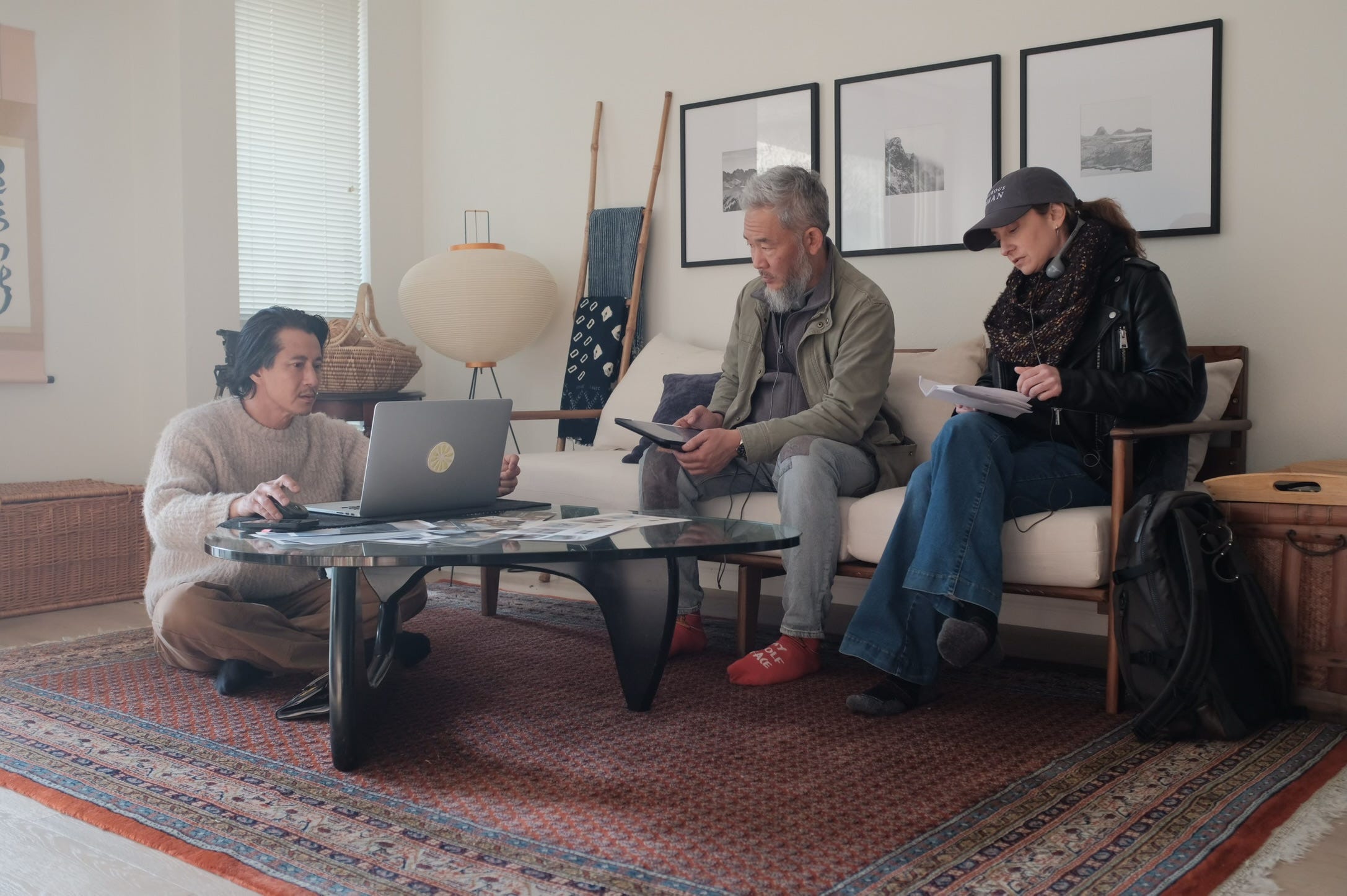
The TEN STEPS I’m about to list are possible for you, for your friends, for anyone with both an idea and the will to bring it to life. We’ll start there.
We had an idea for something we could shoot in one location. My partner James has always had an affinity for the artist Isamu Noguchi, who as he put it, is the most famous 20th century artist you’ve never heard of. Early in our relationship, James confessed his dream is that he wanted to make an epic film of Noguchi’s life story. Except it would cost about $200 million because the guy lived and created all over the world. But one of Isamu Noguchi’s installations is in Costa Mesa. It’s called “California Scenario” and has so many different areas to shoot in I wondered if we could do an entire microbudget film there inspired by our lives, which are are pretty stark “California scenarios.” We’re divorced with co-parenting situations, diverse families and exes, and like Noguchi we’ve been through our share of intergenerational traumas related to the themes of Noguchi’s work. I sent James a few pages of an small emotional story I thought might resonate with him, set in Noguchi’s sculpture garden in Costa Mesa.
We got permission to shoot there. This actually took longer than it might for a more typical small film , because we needed to figure out who owned the rights to the installation. We followed the trail. We wrote emails and letters… and eventually got permission.
We wrote the script. I actually think we should have written the script first. But because we weren’t sure whether we could get the rights to shoot in California Scenario, we waited a little too long to finish that fucker. If you don’t know how to write yet, great! Writing a small film that takes place in one location with just a few characters is an awesome way to begin. If you haven’t read any screenwriting books yet, I started with Syd Field. But don’t overthink it. Pick one and if it doesn’t resonate, head over to the library and grab another. There are lots of decent free books. I also recommend classes off the Sundance Collab site, or live Zooms from Writing Pad. Anything with an expert that is going to help guide you and potentially give you a deadline.
We cast the film. We are extremely fortunate to have tons of talented actor friends who fit the cast list willing to work under the SAG low-budget agreement. We were thrilled to work with them again and they were thrilled to be doing meaningful work. It was ultimately a win-win for every single person. But if you don’t have those friends yet, there are dozens of acting schools in LA (I’m partial to Anthony Meindl because we workshopped parts of California Scenario with him and he was so raw and vulnerable in the way he worked with us and his students). These schools all have talented, passionate students who, like you, came here to make movies and television. Call one or all of them, explain you’re casting a film and ask who they have that might be right. You’ll all be learning together. That is a Good Thing.
We created a Seed & Spark to crowdfund the film. The reason we chose Seed & Spark over Indiegogo or Kickstarter is the fact that they take ZERO of the funds. They run only on tips and donations. God bless and keep their founder and CEO Emily Best for one of the best tools in the history of independent film. They not only exist as a platform, but their team of film vets will help you develop your crowdfund page until it’s as bright and shiny and sales-ready as a presentation to some billionaire venture capital firm. We also considered a fiscal sponsorship, but getting the funds out of the fiscal sponsor would take too long for our timeline. In another post, I’ll talk about why I think our crowdfund was successful.
We crewed up. We were lucky and primarily just called in every favor from every colleague we ever loved. This is still possible if you’ve never worked in film and TV, but it’s where the real learning is going to be. If you’re totally green as a director, seek the best DP you can find who believes in your project. There are a lot of LA-based DPs right now who aren’t working and would love the opportunity to help folks who are trying to come up in the business. The same is true for an AD. You can find them on Instagram. At universities. Through friends. The Director, DP, AD are the people on your set who will be setting the tone. If every single one of you has never been on a set before, it’s likely things are going to feel very frantic, and not a little bit messy. I’m not afraid of mess. I actually think mess can feel like play. But mess can also be too chaotic to wrangle, and that means lost days. If you are a new director, do your best to find a DP and AD who have worked before, at the very least in those departments. Meaning, if you have a buddy who’s operated camera before, give her a shot at DP. If you have another who’s been the 2nd AD, that’s also good. Our gaffer on California Scenario killed it and it was his first time gaffing. But he’d been in the trenches long enough to know the job he signed up for. Indies can be a great place for folks to move up a rung on their ladder and bring years of expertise to your tiny project, especially in a business that isn’t currently recognizing their talent.
We planned for post. Do not forget about post. Do not forget about post. PLEASE DON’T FORGET ABOUT POST. It will cost as much or almost as much as production. While you’re crewing up, your AD is scheduling your days, and you’re crowdfunding, please reach out to every post house in town for their lowest possible rates, find a friend of a friend in post-production to guide you, and come up with a plan for dailies, for editing, and for post-production. In an ideal world, even on a tiny movie you plan to edit in your living room on your laptop, post begins BEFORE production.
We shot and completed the film. I don’t even know how to explain the magic of those ten days. And by the way if you’ve never done it before, please don’t try to make a feature in ten days. If you don’t have a seasoned crew, please don’t try to make a feature in ten days. If you don’t have… everything falling into place? PLEASE plan on more than 10 days. If folks have production questions I’m happy to answer those. Those days were literally some of the best of my 47-year-old life. And then sitting in a room with collaborators and colleagues, shaping and coloring, and mixing all that footage? MAGIC. Just magic. MOVIE MAGIC.
We applied to and screened at film festivals. There’s a site called FilmFreeway now where you can upload everything you need to apply to most festivals in one place. It makes everything much more manageable. Also full disclosure, I’m actually not the Producer-in-Charge of that for us, but even as a relative Luddite, I think I’d be able to handle it if it was job. Festivals are expensive to apply to and expensive to attend. But if you can get enough eyeballs and heat on your little film like we did at The Santa Barbara International Film Festival, you will get noticed by distributors. And you will have a way for wider audiences to gush over your adorable baby. I mean, movie.
We are talking to distributors. And I’ll let you know how that goes. There’s a great Substack on here by Ted Hope, which details how to make a film in the “NonDē” movement. Essentially the idea is we no longer “need” distributors because anyone can distribute now. (THIS post is excellent.) The reason we are happy to follow a more traditional route is that I’m actually so excited to make another film now in my “spare time” (as a single mom LOL) that I’d rather someone else take the negative at this point and figure out what’s next. I imagine next time I might try to do the alt-route but with the way my crazy life is right now, I think it’ll eat too much of my time. If you’re young and childfree though, this is exactly what I’d recommend! Another way to learn everything all the way to distribution.
Follow through on these steps and you can complete a feature, a pilot, a short. Really, anything. And it’s glorious. It’s creating without permission. I’ve made shows for Marvel and Apple and Amazon and… I still want to do this again. I made my first film at 47. I wish I'd done it at 27. I wish I'd done it at 37. Stop waiting for permission that was never coming anyway. Go make your thing. I can’t wait to see it.
Thank you!